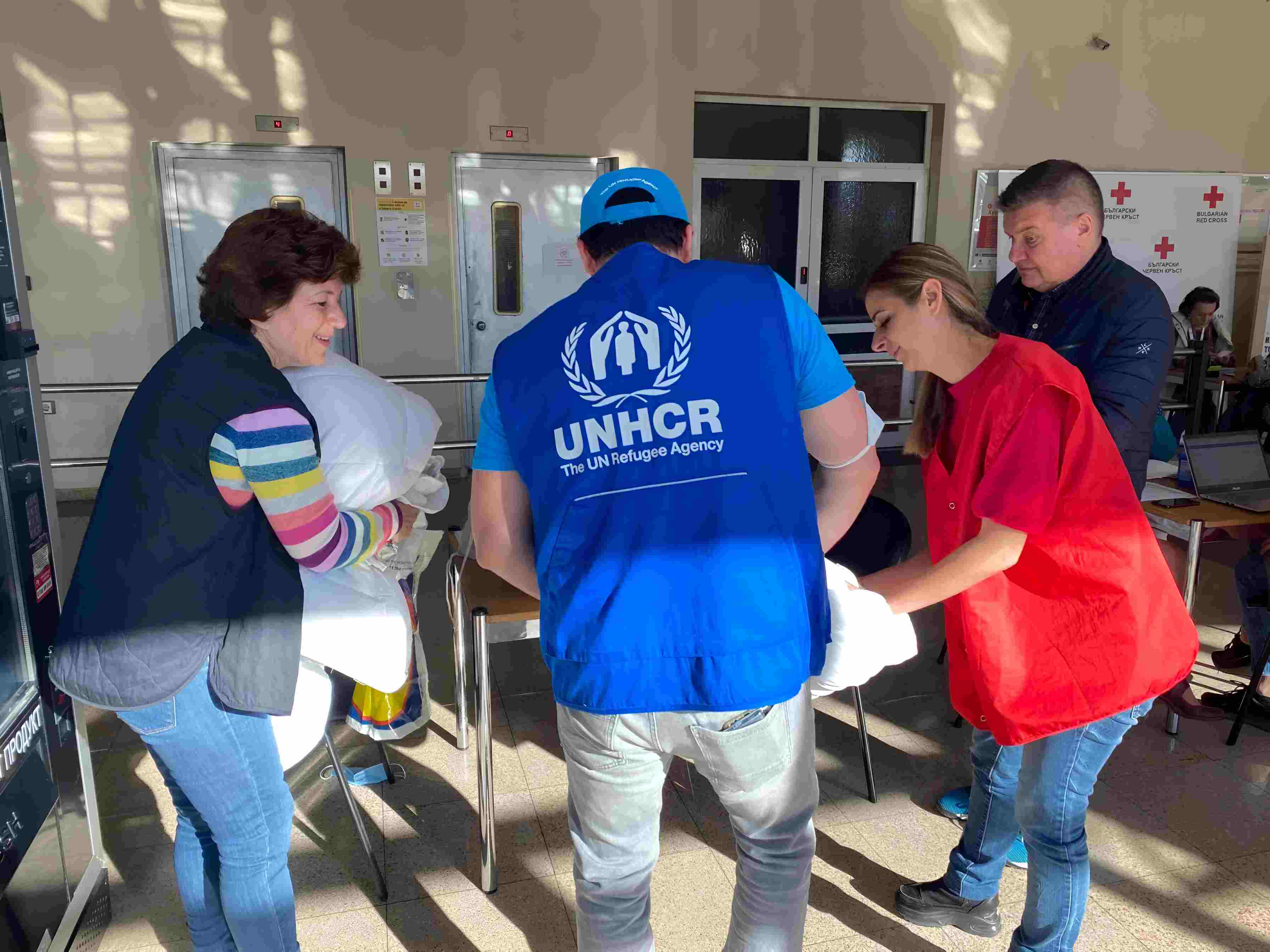
United Nations High Commissioner for Refugees reports a 14 percent drop in asylum applications in Spain in 2025, attributed to new immigration laws and alternative regularization pathways.
Despite fewer arrivals by sea and land, protection needs remain high, particularly among vulnerable groups. The agency calls for sustained support to protect refugees and promote safe, legal migration routes.
In a report released on Thursday, the total arrivals by sea and land dropped significantly, down 43 percent to 36,775 from more than 64,000 in 2024.
UNHCR cautioned that fewer arrivals do not necessarily indicate a decrease in the need for international protection.
Instead, the agency warned that such declines might hide greater risks, more dangerous migration routes, or increased obstacles faced by migrants in transit.
In a detailed review, UNHCR highlighted that Spain’s migration landscape is evolving, with changes in arrival patterns and routes.
For instance, arrivals along the Atlantic route to the Canary Islands fell by about 62 percent compared to 2024, though a surge in arrivals occurred towards the end of the year.
The agency noted a greater diversity in departure points, leading to longer and more perilous journeys.
Conversely, arrivals to the Balearic Islands increased by 24 percent, signaling a partial shift of migration flows towards the western Mediterranean.
Among those arriving, many face acute protection needs, including women, children, and people fleeing violence and humanitarian crises in their home countries.
Paula Barrachina, spokesperson for UNHCR, explained, “The decrease in arrivals by sea reflects multiple factors including conditions in countries of origin, weather, and state cooperation and control measures. While a decline linked to improved safety and protection is positive, it can also mean that more people become trapped in dangerous situations or resort to even riskier routes.”
Asylum applications in Spain in 2025 numbered 144,396, down 14 percent from the previous year.
UNHCR attributed part of this decrease to Spain’s new immigration law, which introduced alternative legal regularization paths for migrants.
This legislative change aims to better address complex migration realities while safeguarding asylum rights for those fleeing conflict or persecution.
Significantly, resolutions on asylum cases rose by 67 percent, reflecting increased efforts to process applications and the urgent need to invest more in human and material resources to prevent backlogs and lengthy waiting times.
The largest group of asylum seekers were Venezuelans, with over 85,000 applications, representing 59 percent of the total and a 29 percent rise from 2024.
Malians made up the second-largest group with 16,000 applications, a 50 percent increase.
Colombians, despite a 64 percent decline, remained the third largest group at about 14,000 applications.
In 2025, Spain granted international protection to 75,274 people, including 7,838 refugees, 10,103 under subsidiary protection, and 57,333 humanitarian protection cases, mostly Venezuelans.
Additionally, 30,375 individuals requested temporary protection, 29,600 of whom were Ukrainians.
The majority of asylum requests, 134,895, were submitted within Spain, especially by people arriving via air from Latin America.
UNHCR stressed that those arriving via sea, land, or air continue to face severe vulnerabilities.
Women and girls accounted for 41 percent of asylum applications, reaffirming the importance of gender- and age-sensitive protection systems.
In the Canary Islands, a significant proportion of arrivals by sea were Malians, about 37 percent, coming from a region marked by violence and displacement.
The number of asylum claims by Malians rose from 6 percent of total applications in 2024 to 11 percent in 2025.
Many vulnerable women, often victims of extreme violence in origin and transit countries, were also among arrivals.
Other routes saw increased arrivals of Somalians and Malians to the Balearic Islands, and Sudanese to Ceuta, confirming persistent international protection needs.
UNHCR’s Barrachina added, “Although arrivals in some routes decrease, the protection needs and risks remain. Maritime routes, particularly to the Canary Islands, remain highly dangerous, and we remain concerned about deaths, disappearances, violence, exploitation, and human trafficking along these journeys.”
The agency emphasized the need for international cooperation focused on sustainable solutions, including protection along routes, humanitarian assistance, and access to safe and legal migration options.
Without accessible alternatives such as family reunification, resettlement, or complementary pathways, many continue to resort to hazardous routes.
In 2025, Spain maintained its commitment to safe pathways through resettlement programs, welcoming 861 refugees from Lebanon and Costa Rica, 30 percent of whom were women and 37 percent children.
These programs offer vital protection to those most in need without exposing them to perilous journeys.
As Spain navigates complex migration challenges, UNHCR calls for sustained investment in protection systems, improved processing capacity, and international solidarity to ensure that vulnerable migrants and refugees receive the assistance and safety they require.































Comments
Sign in with Google to comment, reply, and like comments.
Continue with Google